Top kits

Bafang BBSHD 1000W: Power, Torque, Top Speed and Weight

The label says 1000W. A charged pack and the 30A controller push peak input well past that, which is why the same motor also turns up described as a 1500W unit.

Up to date · September 2026
Quick answer

The Bafang BBSHD is rated at 1000W on 48V with a 30A controller, so peak electrical input lands around 1,450–1,750W depending on pack voltage and state of charge. Bafang claims 160Nm at the crank. Top speed comes from your gearing, your voltage and the limit you program, not from the label.

  • Rated 1000W on 48V, with 52V a common choice
  • 30A stock current limit
  • 160Nm claimed crank torque
  • Versions for 68–73mm, 100mm and 120mm shells
  • Cadence-based assist, no torque sensor
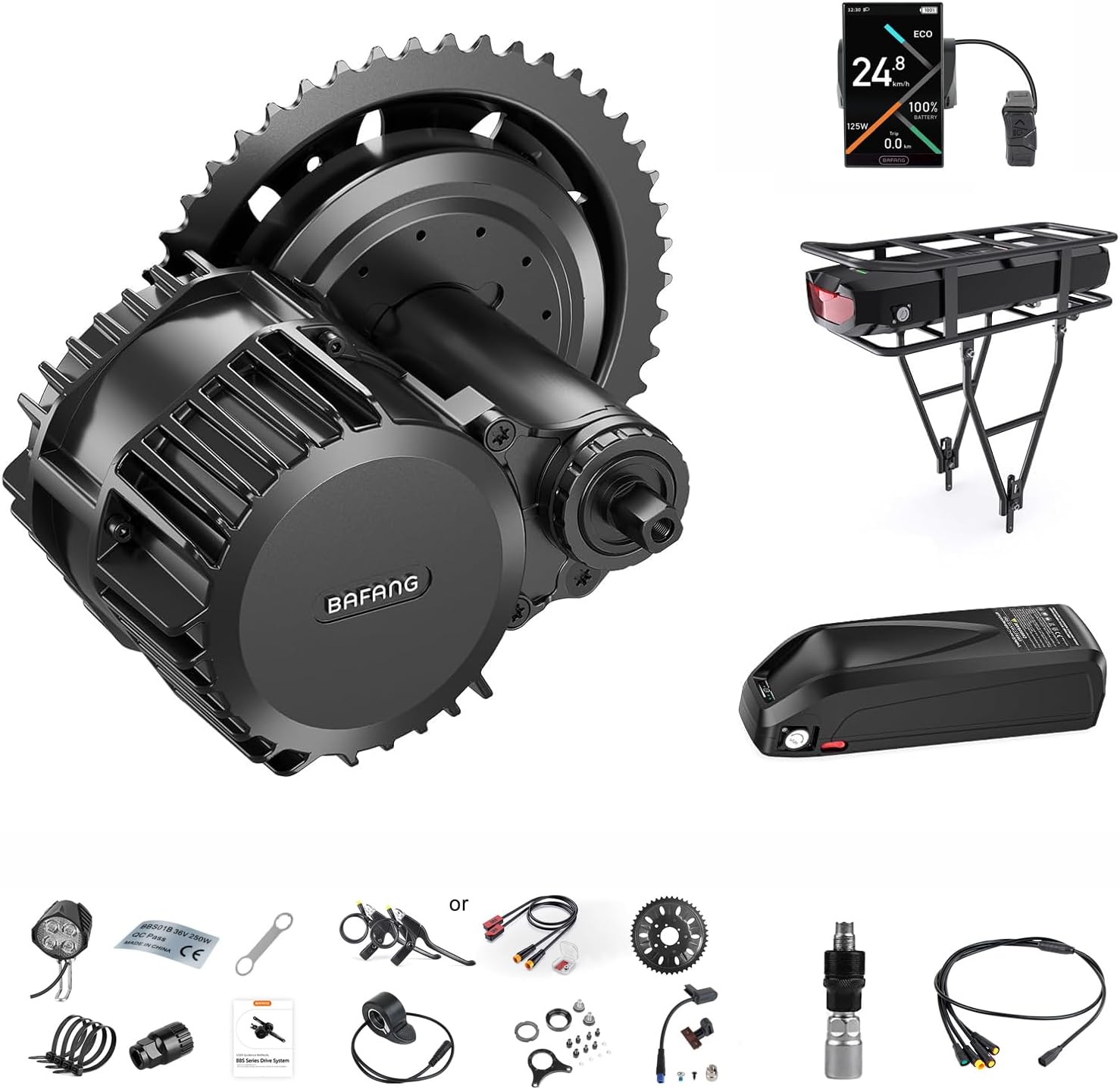
Best for most frames1 BAFANG BBS-HD 1000W Kit
BAFANG BBS-HD 1000W Kit
The 1000W HD in 68–73mm, 100mm and 120mm versions, so one kit covers road, trail and fat bikes
  • Complete mid-drive conversion kit
  • 1000W
  • Fits 68/100/120mm bottom brackets
Shop now
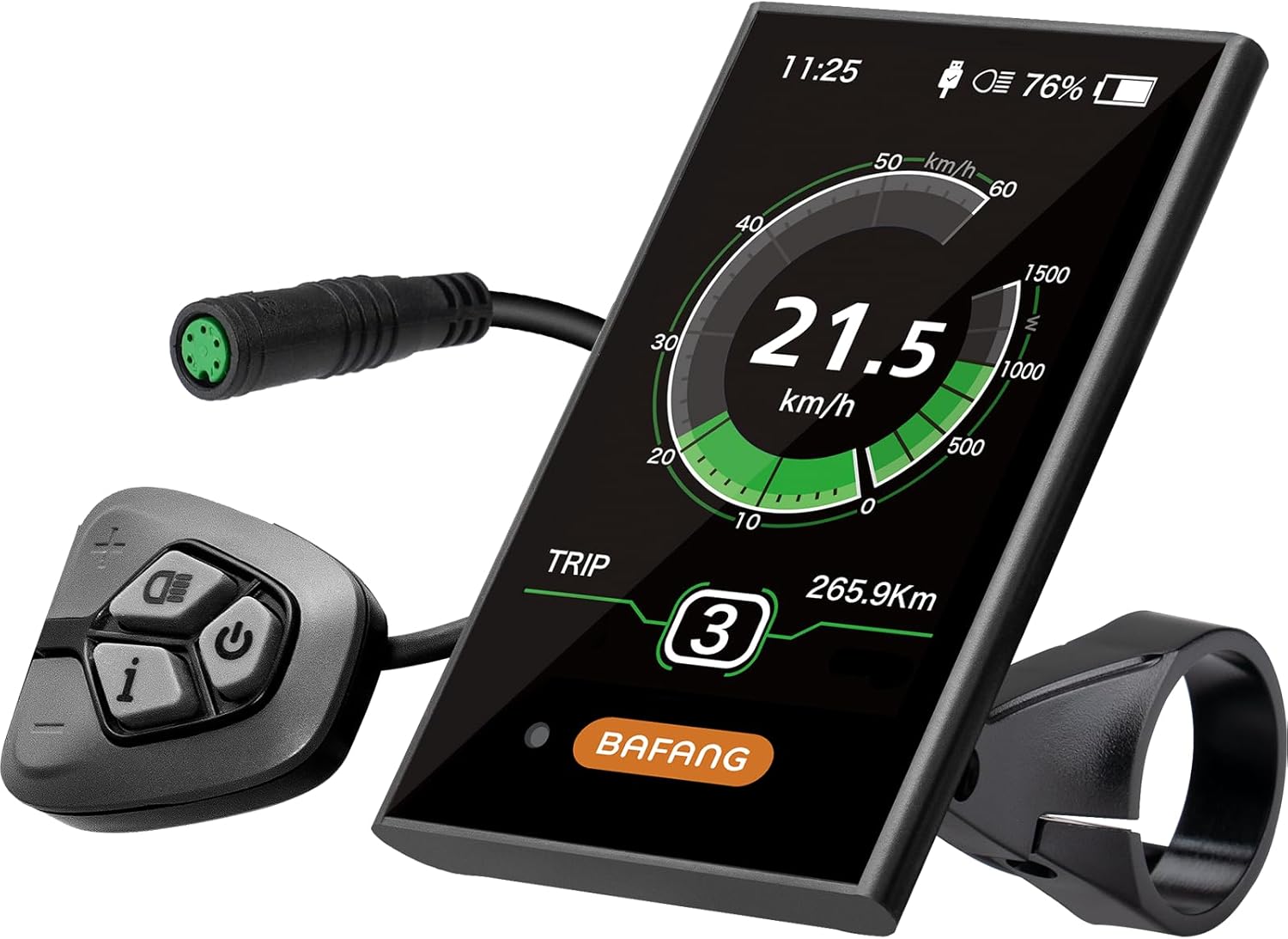
Best for newer electronics2 BAFANG BBS-HD CAN-bus Kit
BAFANG BBS-HD CAN-bus Kit
The same 1000W motor with CAN-bus control, a display and an optional battery
  • Complete mid-drive conversion kit
  • 1000W · 36V/48V/52V
  • Fits 68–73/100/120mm bottom brackets
Shop now
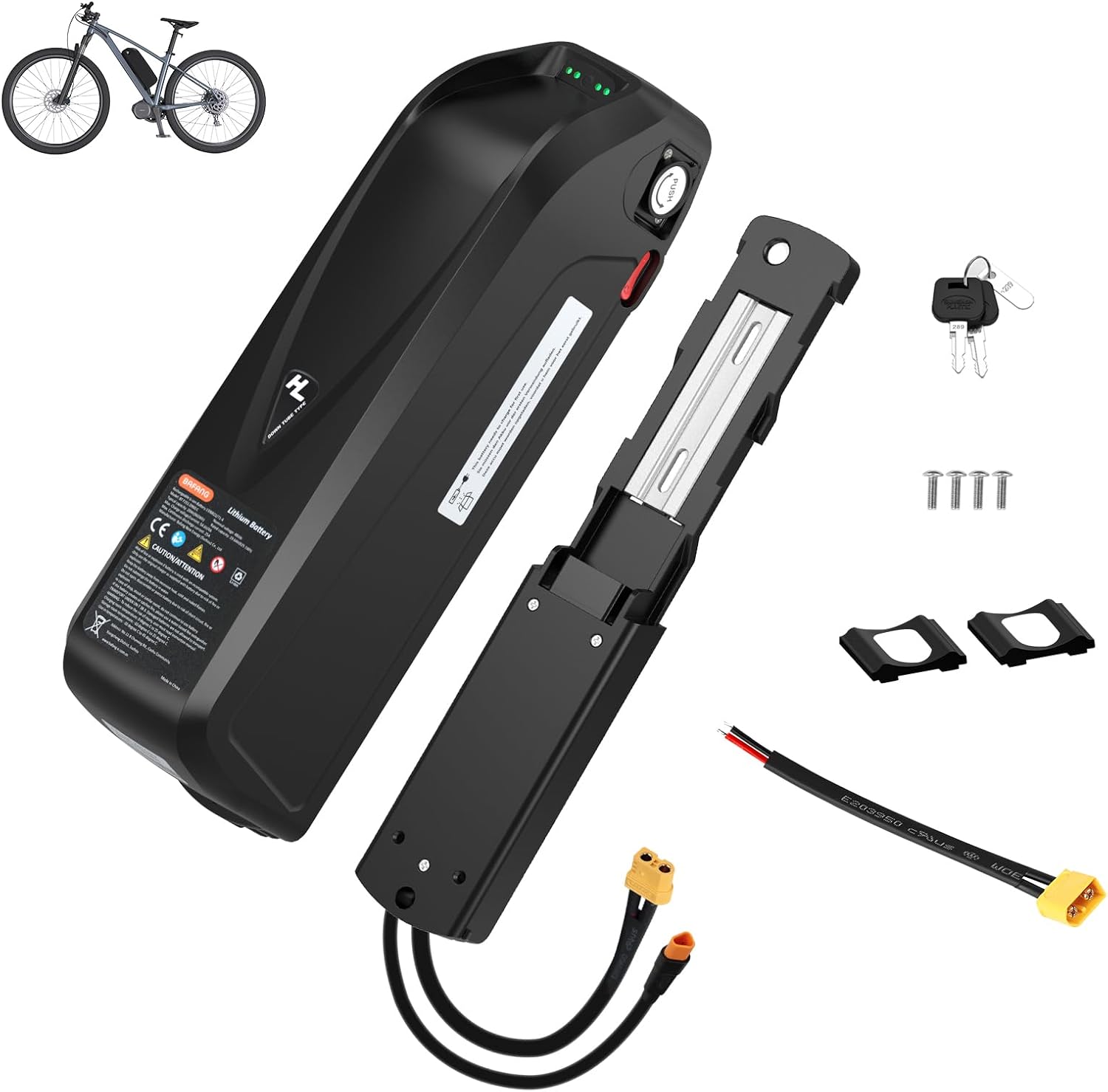
Best for a bare-frame build3 BAFANG BBS-HD Kit with Battery
BAFANG BBS-HD Kit with Battery
Motor and a 48V or 52V pack in one box, with a matching connector
  • Complete mid-drive conversion kit
  • 1000W · 48V/52V
  • Battery option available
Shop now

Why a 1000W motor draws 1,700 watts on a fresh pack

The 1000W figure is a rated, continuous number. What the motor pulls in a hard climb depends on two other things: the 30A current limit in the controller and the voltage your pack delivers at that moment.

Multiply them and you get peak electrical input. A 48V pack sits at 54.6V when full, and a 52V pack at 58.8V, so the numbers climb well past the label.

PackVoltagePeak input at 30A
48V, full54.6Vabout 1,640W
48V, nominal48Vabout 1,440W
52V, full58.8Vabout 1,760W
52V, nominal52Vabout 1,560W

That is input, not output. Losses in the windings, the controller and the gearbox take their share, and they grow as the motor heats up. Voltage also sags under load, so a real climb sees less than the full-charge row.

  • Seen as a 1500W motor? That is peak input rounded, with the same hardware and the same 30A controller.
  • Seen as a 750W motor? Combined BBS02B/BBS-HD kits offer 500W and 750W options, and those are BBS02B motors, not the HD.
  • Want more than 30A? That takes an aftermarket controller, covered in the controller guide.

In the US, the 1000W rating matters more than the peak. The Class 1–3 system most states use caps the motor at 750W, so a BBSHD bike is an off-road or private-land machine in most places.

Specs table

The BBSHD spec sheet, line by line

SpecBBSHDWhat it means on the bike
Rated power1000WAbove the 750W US Class 1–3 limit
Nominal voltage48V (52V widely used)52V adds roughly 8% speed and punch
Controller current30ACaps torque and peak watts
Peak input, 48V pack fullabout 1,640W54.6V × 30A, falls as the pack drains
Peak input, 52V pack fullabout 1,760W58.8V × 30A
Claimed torque160Nm at the crankMultiplied again by your low gears
Bottom bracket68–73mm, 100mm, 120mmPick the version for your shell
Shell inner diameterabout 33.5–36mmThreaded shells; press-fit needs an adapter
Assist sensingCadence (rotation)No factory torque sensor
Primary gearNylonQuiet, the part that wears first
ProtocolUART or CAN busDecides displays and programming tools
Other namesBBS03, MM G320.1000Same motor family

Rated figures are Bafang's. Peak input is full-charge pack voltage multiplied by the 30A limit, before motor losses; delivered power at the crank is lower.

Hauling a kid seat and a week of shopping up a long grade

Bafang claims 160Nm for the BBSHD, measured at the crank. That is the number cargo riders care about, because torque at the crank is multiplied again by every low gear on the cassette before it reaches the tyre.

Put a 42T ring against a 42T cog and the rear wheel sees roughly the crank torque. Drop to a 36T ring on the same cog and the wheel sees more, at a slower road speed. That is how a mid-drive hauls a loaded longtail up a grade that stalls a hub motor of similar rating.

The 160Nm is a claimed peak, and it arrives only while the controller lets the full 30A through. Lower the current limit in the software and torque falls with it.

  • Low gears keep torque cheap. The motor makes its pull with less current, so it heats more slowly.
  • High gears on a hill waste it. Cadence drops, current climbs to the limit and heat builds inside the case.
  • Hard launches load the gearbox. The nylon primary gear takes the shock of every full-current start.
Heat soak is the real limit on a long climb, not torque. The stock controller watches its own temperature, not the motor windings, so shift down early and let cadence carry the load.

Riders who haul often pair the HD with a smaller chainring. Tooth counts and cassettes are covered in the chainring guide, and gear wear in the nylon gear guide.

Kit comparison

Three HD kits and a pack, spec by spec

BAFANG BBS-HD 1000W Kit BAFANG BBS-HD 1000W Kit BAFANG BBS-HD CAN-bus Kit BAFANG BBS-HD CAN-bus Kit BAFANG BBS-HD Kit with Battery BAFANG BBS-HD Kit with Battery BAFANG E-bike Battery BAFANG E-bike Battery
TypeConversion kitConversion kitConversion kitBattery
Power1000W1000W1000W—
Voltage—36V/48V/52V48V/52V48V
Bottom bracket68/100/120mm68–73/100/120mm——
Protocol—CAN bus——
Battery—OptionOption—
Shop now Shop now Shop now Shop now
Tech specs

Spec sheets of the top picks

BAFANG BBS-HD 1000W Kit
Motor
Bafang BBS-HD (model G320), 1000W rated
Other power options
500W and 750W, both BBS02B motors
Torque
Up to 160 N·m at 1000W; 120 N·m at 750W; 100 N·m at 500W
Top speed
Up to 45 km/h (maker figure)
Battery voltage
48V or 52V; 36V on some smaller-motor versions
Battery connector
XT60 male on the motor lead
Battery options
None, 48V 13/16/18.2/20Ah or 52V 20Ah
Bottom bracket width
68–73mm, 100mm or 120mm versions
Bottom bracket inner diameter
33.5–36mm (JIS)
73mm shells
Longer screws needed, not included in every version
Brake compatibility
Disc or V-brake; chain-driven bikes only
Riding modes
Throttle, pedal assist, unassisted cycling
Details →Shop now
BAFANG BBS-HD CAN-bus Kit
Motor
BBS-HD, 1000W; one version also offers BBS02B 750W and 500W
Protocol
CAN bus
Torque
160 N·m at 1000W; 120 N·m at 750W; 100 N·m at 500W
Top speed
Up to 37 mph at 1000W; 34 mph at 750W; 28 mph at 500W (maker figures)
Sensors
Dual Hall sensors
Battery voltage
48V or 52V on the HD; 36V on the smaller options
Battery connector
XT60 male
Battery options
None, or 48V/52V packs from 13Ah to 20Ah
Battery communication
Supported with a communication-capable battery
Bottom bracket width
68–73mm, 100mm or 120mm
Bottom bracket inner diameter
33.5–36mm
Frame limits
Not for carbon frames or coaster brakes
Details →Shop now
BAFANG BBS-HD Kit with Battery
Motor
Bafang BBS-HD (BBS03), 1000W; model M615 MM G320.1000.C
Other power options
250W, 500W or 750W on some versions (smaller BBS motors)
Torque
Up to 160 N·m
Top speed
Over 30 mph on the flat (maker figure)
Battery voltage
48V or 52V; 36V on the small-motor UART version
Battery capacities
48V 13Ah, 48V 20Ah, 52V 20Ah
Bottom bracket width
68–73mm
Bottom bracket inner diameter
34–36mm
Protocol
UART through a 1T4 harness
Display
LCD included; 500C, DM03, P860C, C18, B02N or T1 on the 52V 20Ah versions
Brake cutoff
Brake levers, or hydraulic brake sensor cables
Riding modes
Throttle, pedal assist, push assist
Details →Shop now

Flat-road top speed comes from gearing and voltage

A BBSHD has no fixed top speed. The motor spins the crank, so road speed is crank speed multiplied by your gear ratio and wheel size, capped by whatever limit you program into the controller.

Here is what a 27.5-inch wheel, roughly 2.2m around, does at two cadences. These figures are gearing maths; whether the motor can push you there depends on voltage, current, rider weight and wind.

Ring / cog70 rpm90 rpm
42T / 11Tabout 22 mphabout 28 mph
46T / 11Tabout 24 mphabout 31 mph
42T / 14Tabout 17 mphabout 22 mph
42T / 36Tabout 7 mphabout 9 mph

Crank rpm is the figure people search for as "BBSHD rpm", and it rises with voltage. A motor's top speed scales with the voltage it sees, so a 52V pack spins roughly 8% faster than a 48V pack at the same load.

  • Kits that list up to 45km/h or 37mph describe a fresh pack, tall gearing and no speed limit.
  • The speed limit set in the controller cuts pedal assist; in some setups the throttle can be allowed past it.
  • Tall gears raise top speed but slow every climb, so pick rings for the ride you do most.

For road use, the 28mph assisted limit of a US Class 3 bike is beside the point on a BBSHD, since the 1000W rating already puts it outside the classes in most states.

Pick of the bunch

The kit that carries the full spec

BAFANG BBS-HD 1000W Kit
Best for most builds BAFANG BBS-HD 1000W Kit

The standard BBS-HD kit covers 68–73mm, 100mm and 120mm shells with the full 1000W motor and 30A controller. Pair it with a 52V pack of your own and you get the full HD spec without paying for a battery you already own.

Shop now

Bolting the extra pounds onto a trail bike

The HD is a heavy motor, and it hangs low in the middle of the bike, which is the best place for the weight to go. Published figures put the motor with its controller in the region of 5–6kg, roughly 11–13lb, depending on whether crank arms and chainring are included.

Add the battery and a complete conversion puts somewhere around 9–12kg on the bike, depending on pack size. A 52V 20Ah pack sits at the heavy end; a small 48V pack at the light end.

The dimensions that matter are the ones touching your frame. Measure these before you order:

  1. Shell width. 68–73mm for the standard version, 100mm or 120mm for fat bikes.
  2. Shell bore. Roughly 33.5–36mm inner diameter, threaded.
  3. Down tube clearance. The motor body points forward under the down tube; a low tube, a cable guide or a kickstand plate can foul it.
  4. Chainstay clearance. The chainring and its offset must clear the drive-side stay, which gets tight on fat bikes.
  5. Ground clearance. The case sits lower than a normal crankset, so rocky trails and curbs find it.

Weight shows most when you lift the bike onto a rack or push it with the motor off. With the power on it disappears on climbs, and on descents the low mass keeps the bike planted.

Frame-by-frame fit is covered in the install guide, and wide shells in the fat-bike guide.

Charted

Rated watts across the BBS family

Bafang's rated power for each motor's highest version, next to the 750W motor limit in the US Class 1–3 e-bike rules.

Pedal feel without a torque sensor

The BBSHD reads cadence, not pedal force. A sensor in the motor counts crank rotation, and once you have turned the cranks past a set point the controller sends the current your assist level allows, however lightly you press.

That design is simple and hard to break, and it suits riders who want the motor to do the work. It also explains the most common complaint: assist can feel like a switch, arriving with a surge and cutting a moment after you stop pedalling.

Programming softens it a great deal. These settings do most of the work:

  • Start current sets how hard the first push is.
  • Slow-start mode stretches the ramp from zero to full assist.
  • Start degree decides how far the crank turns before assist begins.
  • Stop delay shortens the run-on after you stop pedalling.
  • Assist level spacing gives fine steps at the bottom for singletrack.
Bafang makes no torque-sensing version of the BBSHD. If proportional assist beats raw power on your list, the Bafang Ultra, the CYC X1 Pro and the Tongsheng TSDZ2 read pedal force.

Those motors are compared head to head in the BBSHD vs Ultra guide. For most HD owners, the fix is an evening with the cable and the programming guide, which turns the on-off feel into something closer to a smooth ramp.

A throttle works alongside pedal assist on every version, and many riders use it to fill the gap at junctions where cadence assist is slow to react.

Build Q&A

Builders ask

Is the BBSHD 1000W or 1500W?

It is rated at 1000W. The 1500W figure comes from peak input: 30A from a charged 48V or 52V pack is roughly 1,600–1,750W before losses.

How much torque does the BBSHD make in Nm?

Bafang claims 160Nm at the crank. That peak needs the full 30A current limit, and your low gears multiply it again at the wheel.

What is the BBSHD's top speed?

It depends on gearing, wheel size, voltage and the programmed limit. With tall gears and a charged 52V pack, flat-ground speeds in the high 20s mph are within reach, and assist stops at whatever limit you set.

How much does a BBSHD weigh?

Published figures put the motor with controller at about 5–6kg (11–13lb), depending on what is included. A full conversion with battery adds roughly 9–12kg to the bike.

Is there a 750W BBSHD?

Combined kits that offer 500W and 750W options are selling the BBS02B for those choices. The HD itself is rated at 1000W.

Does the BBSHD have a torque sensor?

No. It uses a cadence sensor, and assist starts once the crank turns. Softer programming settings make it feel smoother.

Keep building

More BBSHD guides

Garage shelf

Parts that let the HD show its numbers