Top kits

BBS02 vs BBSHD: Power, Heat, Gearing and Which Kit to Buy

The BBS02 is the 750W little brother; the BBSHD is the 1000W motor built to take long climbs and heavy loads. They share a harness, displays and throttles, and part ways on heat, chainrings and weight.

Up to date · September 2026
Verdict

Pick the BBSHD if you climb long grades, carry cargo, weigh more than average or ride a fat bike: its bigger motor and 30A controller shrug off heat that pushes a BBS02 hard. Pick the BBS02 if you want a lighter, cheaper kit for moderate hills and road riding, with a 750W rating inside the US Class 1–3 power limit.

  • BBSHD: 1000W, 30A, 160Nm claimed
  • BBS02B: 750W, 25A, about 120Nm claimed
  • Same 1T4 harness, displays, throttles and cable
  • Different chainrings and controllers
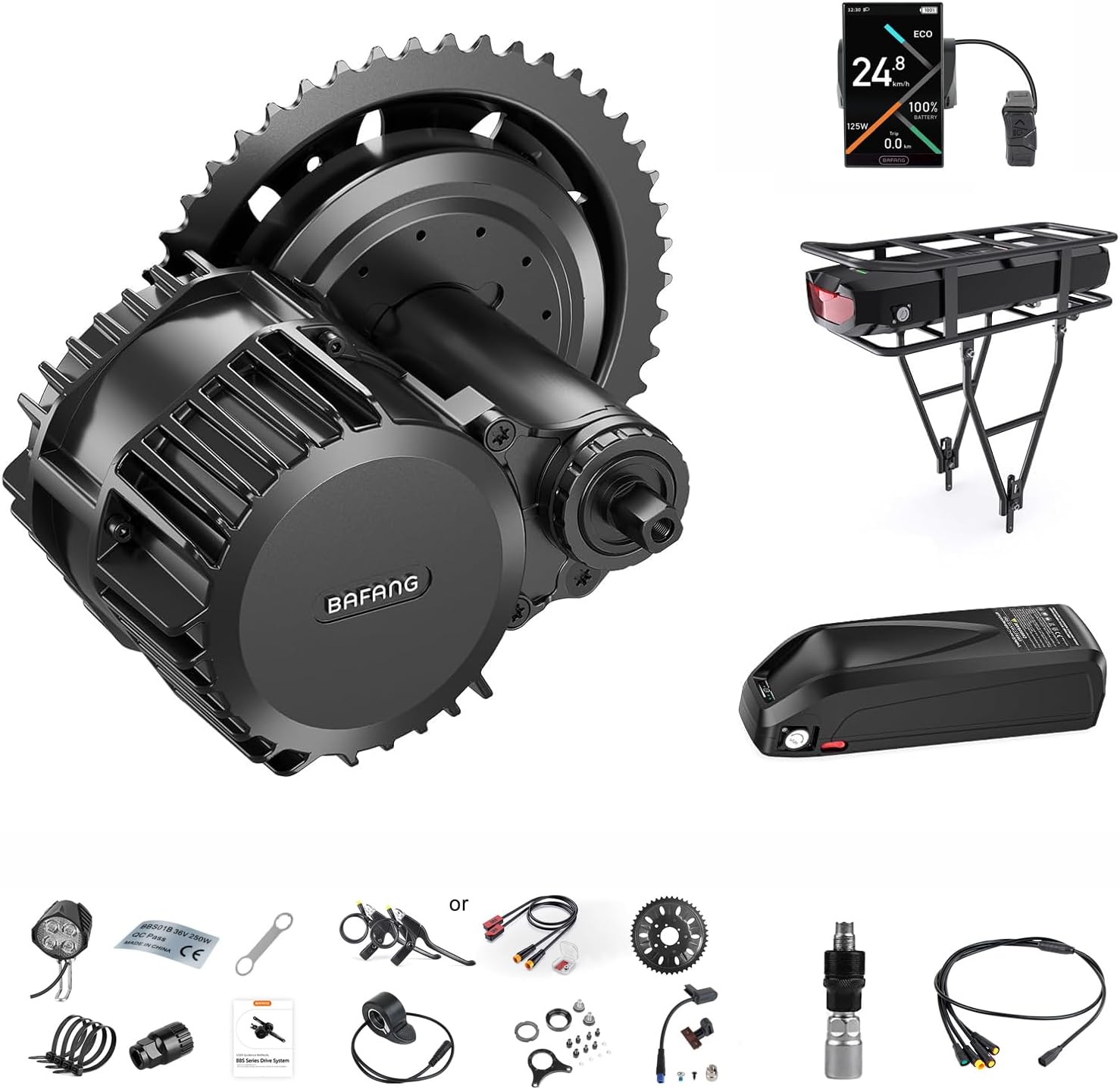
Best for heavy work1 BAFANG BBS-HD 1000W Kit
BAFANG BBS-HD 1000W Kit
The full 1000W HD for 68–73mm, 100mm and 120mm shells, built for cargo, fat bikes and long climbs
  • Complete mid-drive conversion kit
  • 1000W
  • Fits 68/100/120mm bottom brackets
Shop now
Best for choosing either motor2 BAFANG BBS-HD CAN-bus Kit
BAFANG BBS-HD CAN-bus Kit
A CAN-bus kit offered as a 1000W HD or a 750W BBS02B, with a display and optional battery
  • Complete mid-drive conversion kit
  • 1000W · 36V/48V/52V
  • Fits 68–73/100/120mm bottom brackets
Shop now

Three motors, one family: BBS01, BBS02 and BBSHD

Bafang's BBS line comes in three sizes. The BBS01B is the small 36V motor at 250W or 350W, the BBS02B is the 48V middle child at 500W or 750W, and the BBSHD is the heavy-duty 1000W unit.

BBS02B is simply the current revision of the BBS02, so BBS02B vs BBSHD and BBS02 vs BBSHD are the same question. All three share a family look and a lot of plug-in parts.

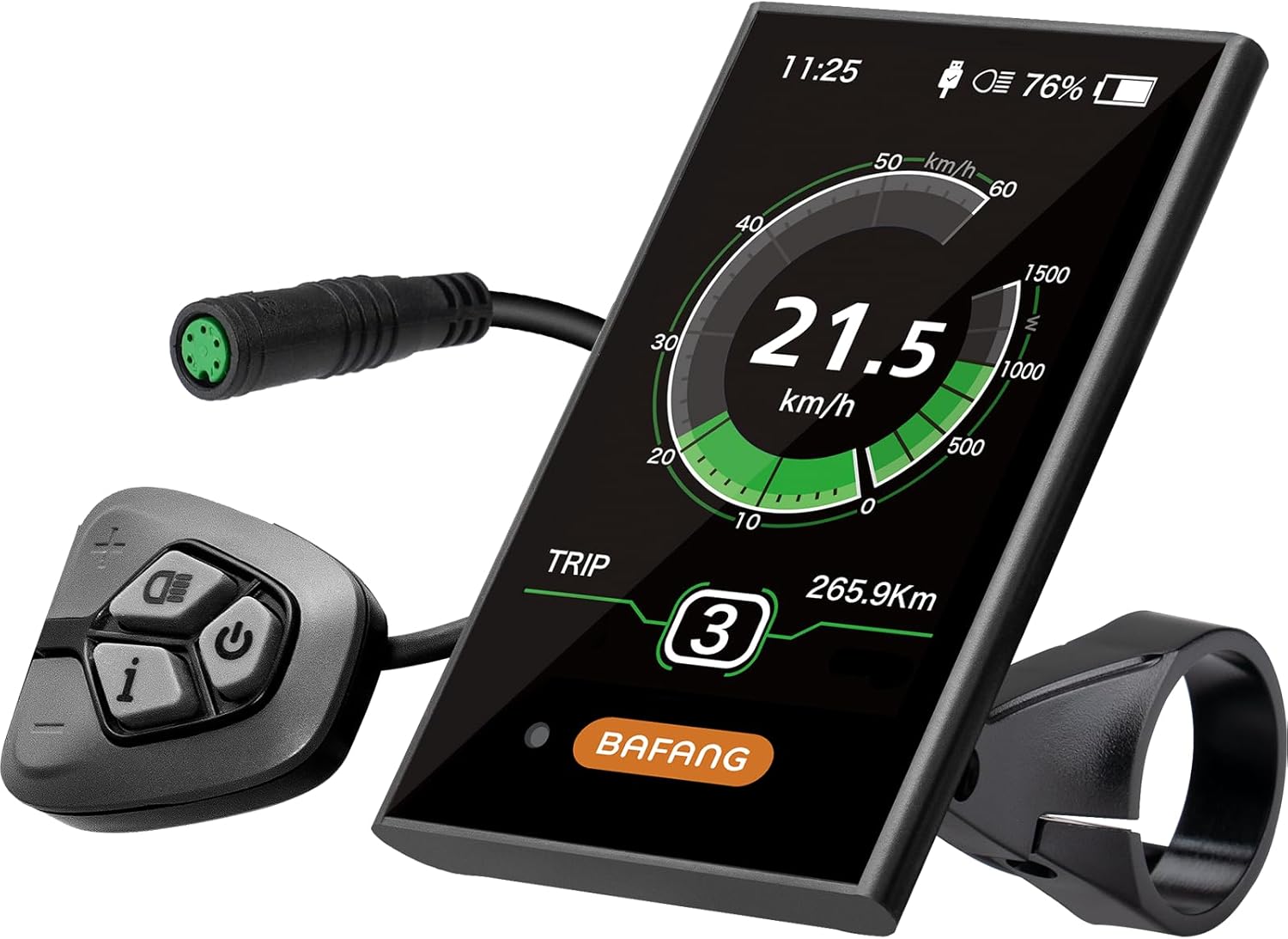
  • Shared: the 1T4 harness, UART displays such as the DPC18 and C961, 3-pin thumb throttles, cut-off brake levers, the speed sensor and the USB programming cable.
  • Different: the motor size, the controller current, the chainring mount and the controller board itself.
  • Rated power: 250–350W, 500–750W and 1000W from smallest to largest.

Claimed torque follows the same ladder. Bafang quotes 100Nm for the 500W BBS02B, 120Nm for the 750W version and 160Nm for the HD, with the BBS01B well below all of them.

RiderMotor that fits
Light rider, flat commuteBBS01B
Mixed riding, moderate hillsBBS02B
Cargo, steep climbs, fat bikeBBSHD

In the BBS01 vs BBS02 vs BBSHD three-way, the BBS01 drops out for most conversion builders once hills or loads enter the picture. The real choice is between the two bigger motors.

The HD's own numbers are unpacked in the BBSHD 1000W spec guide.

Specs table

BBS01B, BBS02B and BBSHD side by side

BBS01BBBS02BBBSHD
Rated power250W or 350W500W or 750W1000W
Typical pack36V48V48V or 52V
Controller currentLower25A30A
Claimed torqueroughly 80Nm100Nm (500W), 120Nm (750W)160Nm
Peak input, 48V pack fulln/aabout 1,370W at 25Aabout 1,640W at 30A
Bottom bracket68–73mm68–73mm, wider versions68–73mm, 100mm, 120mm
ChainringsBBS01/02 patternBBS01/02 patternHD-only spline
1T4 harness, displays, throttlesSharedSharedShared (UART)
Primary gearNylonNylonNylon
US Class 1–3 power limit (750W)WithinWithin at 750WAbove

Rated power, current and claimed torque are Bafang's figures; BBS01B torque varies by version. Peak input is full-charge voltage times the current limit, before losses.

Forty minutes of climbing and which motor runs hot

Heat decides this comparison more than peak power. On a short hill both motors feel strong; on a long climb with weight on the bike, the smaller motor fills with heat long before the HD does.

The BBSHD has a bigger motor with more mass to soak up heat and more surface to shed it. Its controller is built for 30A. The BBS02's 25A board and smaller motor work harder for the same climb.

  • Overdriven BBS02s, programmed past stock current or run hard on 52V, have a long-standing reputation for controller failures.
  • The HD at stock settings takes the same abuse far more calmly.
  • Neither motor senses winding temperature, so heat builds silently in both until the controller steps in or damage is done.

Picture a loaded longtail on a 40-minute mountain road. The BBS02 rider shifts low, keeps cadence up, eases off the assist and still feels power fade near the top. The HD rider, on the same gearing, has headroom to spare.

If you already know your rides include long climbs with weight on board, the HD is the safer buy. Upgrading from a cooked BBS02 costs more than starting with the bigger motor.

For short, punchy hills and flat commutes, the BBS02 rarely gets hot enough to matter. Climbing habits that keep either motor cool are in the torque and heat notes of the HD spec guide.

Charted

Peak input: BBS02 against BBSHD

Peak electrical input at full charge (54.6V for 48V, 58.8V for 52V) times each motor's stock current limit, before motor losses.

Chainrings, chainline and the nylon gear in both motors

Gearing is where BBS02 and BBSHD owners live different lives. The two motors use different chainring mounts, so a ring for one will not fit the other, and the HD's stock ring sits further outboard.

That outboard ring is why HD owners talk about chainline so much. On the smallest cogs the chain runs at a steep angle, drops more easily and wears faster. Offset rings pull the line back toward the centre of the cassette.

  • HD rings use the HD's own spline, with direct-mount options from about 32T to 52T and 104 BCD or 130 BCD spiders for standard rings.
  • BBS02 rings use the BBS01/02 pattern and have a wide choice of their own.
  • Both motors reward a smaller ring for climbing and cargo, since lower gears cut current and heat.

Inside, both motors use a nylon primary gear. It keeps them quiet and acts as a fuse of sorts, wearing before anything more expensive breaks. Hard launches at full current are its enemy on either motor.

  1. Soften the start current in the programming tool.
  2. Shift before a climb, not halfway up it.
  3. Carry a spare gear on long trips if your motor has plenty of miles.

The HD's higher current puts more load on its gear, so a gentle launch matters even more there. Ring choices are covered in the chainring guide, and gear replacement in the nylon gear guide.

Pick of the bunch

When the bigger motor earns its weight

BAFANG BBS-HD 1000W Kit
Best if the hills are long BAFANG BBS-HD 1000W Kit

The standard BBS-HD kit gives you the bigger motor, the 30A controller and versions for every common shell width. If your riding includes long climbs, cargo or sand, it is the motor that stays cool enough to keep pulling.

Shop now

Frame fit, weight and law: where the BBS02 wins

The BBS02 has real advantages, and they matter to plenty of riders. It is lighter, cheaper and draws less from the battery, and its 750W rating fits inside the US Class 1–3 power limit.

Weight first. The HD is the bigger motor, and published figures put it roughly a kilogram heavier than the BBS02, depending on crank arms and chainring. On a light commuter or a bike you lift onto a train, that shows.

  • Range. A 25A controller draws less at full assist, so the same pack goes further when you ride hard.
  • Cost. The BBS02 kit costs less, and so do many of its parts.
  • Law. A 750W motor can meet the Class 1–3 power limit in most US states; a 1000W HD cannot.
  • Feel. Lower peak power can suit a lighter frame and a gentler rider.

Frame fit is close between them. Both come for 68–73mm shells, and both appear in wider versions, though the HD is the usual pick for 100mm and 120mm fat bikes. Clearance under the down tube matters for either motor.

Road riders who want a legal e-bike have a straightforward choice. A BBS02 at 750W keeps you within the power limit, while an HD bike counts as an off-road machine in most states. Speed and assist rules still apply on top of the power limit, so check your state's classes.

Frame checks for both are in the install guide, and donor bikes in the BBSHD ebike guide.

Kit comparison

HD kits to weigh against a BBS02

BAFANG BBS-HD 1000W Kit BAFANG BBS-HD 1000W Kit BAFANG BBS-HD CAN-bus Kit BAFANG BBS-HD CAN-bus Kit BAFANG BBS-HD Kit with Battery BAFANG BBS-HD Kit with Battery
TypeConversion kitConversion kitConversion kit
Power1000W1000W1000W
Voltage—36V/48V/52V48V/52V
Bottom bracket68/100/120mm68–73/100/120mm—
Protocol—CAN bus—
Battery—OptionOption
Shop now Shop now Shop now
Tech specs

Spec sheets of the top picks

BAFANG BBS-HD 1000W Kit
Motor
Bafang BBS-HD (model G320), 1000W rated
Other power options
500W and 750W, both BBS02B motors
Torque
Up to 160 N·m at 1000W; 120 N·m at 750W; 100 N·m at 500W
Top speed
Up to 45 km/h (maker figure)
Battery voltage
48V or 52V; 36V on some smaller-motor versions
Battery connector
XT60 male on the motor lead
Battery options
None, 48V 13/16/18.2/20Ah or 52V 20Ah
Bottom bracket width
68–73mm, 100mm or 120mm versions
Bottom bracket inner diameter
33.5–36mm (JIS)
73mm shells
Longer screws needed, not included in every version
Brake compatibility
Disc or V-brake; chain-driven bikes only
Riding modes
Throttle, pedal assist, unassisted cycling
Details →Shop now
BAFANG BBS-HD CAN-bus Kit
Motor
BBS-HD, 1000W; one version also offers BBS02B 750W and 500W
Protocol
CAN bus
Torque
160 N·m at 1000W; 120 N·m at 750W; 100 N·m at 500W
Top speed
Up to 37 mph at 1000W; 34 mph at 750W; 28 mph at 500W (maker figures)
Sensors
Dual Hall sensors
Battery voltage
48V or 52V on the HD; 36V on the smaller options
Battery connector
XT60 male
Battery options
None, or 48V/52V packs from 13Ah to 20Ah
Battery communication
Supported with a communication-capable battery
Bottom bracket width
68–73mm, 100mm or 120mm
Bottom bracket inner diameter
33.5–36mm
Frame limits
Not for carbon frames or coaster brakes
Details →Shop now

Picking BBS02 or BBSHD by the ride you do

Most riders can settle the choice with a quick look at their routes and their loads. Power figures matter less than how long you spend climbing and how much weight rides with you.

Match your riding to a motor:

  • Flat or rolling commute, light rider: BBS02. It is plenty, and lighter.
  • Road-legal build in a Class 1–3 state: BBS02 at 750W.
  • Heavy rider on steep hills: BBSHD, for the heat margin.
  • Cargo bike or trailer: BBSHD, every time.
  • Fat bike on sand or snow: BBSHD in the 100mm or 120mm version.
  • Trail riding with long climbs: BBSHD, geared low.

Watch the power option when you order. Many kits offer 500W, 750W and 1000W choices under one name; the 500W and 750W choices are BBS02B motors, and only 1000W brings the HD.

Is the BBSHD worth the extra? If heat, cargo or fat tyres are part of your riding, yes. If none of them are, the BBS02 does the job for less weight and less money.

Both motors take the same displays and throttles, so your handlebar setup carries over if you change your mind later. The display guide compares the screens, and the BBSHD vs Ultra guide looks further up the power range, at the Bafang Ultra and the CYC X1 Pro.

Whichever you choose, programming shapes the ride more than most owners expect. A few evening changes in the programming guide make either motor smoother.

Build Q&A

Builders ask

How does the BBSHD differ from the BBS02?

The BBSHD is a bigger 1000W motor with a 30A controller and 160Nm claimed torque; the BBS02B is a 750W motor with a 25A controller and about 120Nm. The HD handles heat and heavy loads far better; the BBS02 is lighter and cheaper.

Is the BBSHD worth it over the BBS02?

Yes if you climb long grades, carry cargo or ride a fat bike. For flat commutes and moderate hills the BBS02 is enough.

Do BBS02 parts fit a BBSHD?

Displays, throttles, brake levers, the speed sensor, the 1T4 harness and the programming cable are shared on UART versions. Chainrings and controllers are not.

Is the BBS02B different from the BBS02?

The BBS02B is the current revision of the BBS02. The comparison with the BBSHD is the same.

Which is legal on US roads?

A 750W BBS02 can fit within the Class 1–3 power limit in most states, subject to speed and assist rules. A 1000W BBSHD sits above it.

Keep building

More BBSHD guides

Garage shelf

Parts that fit both motors