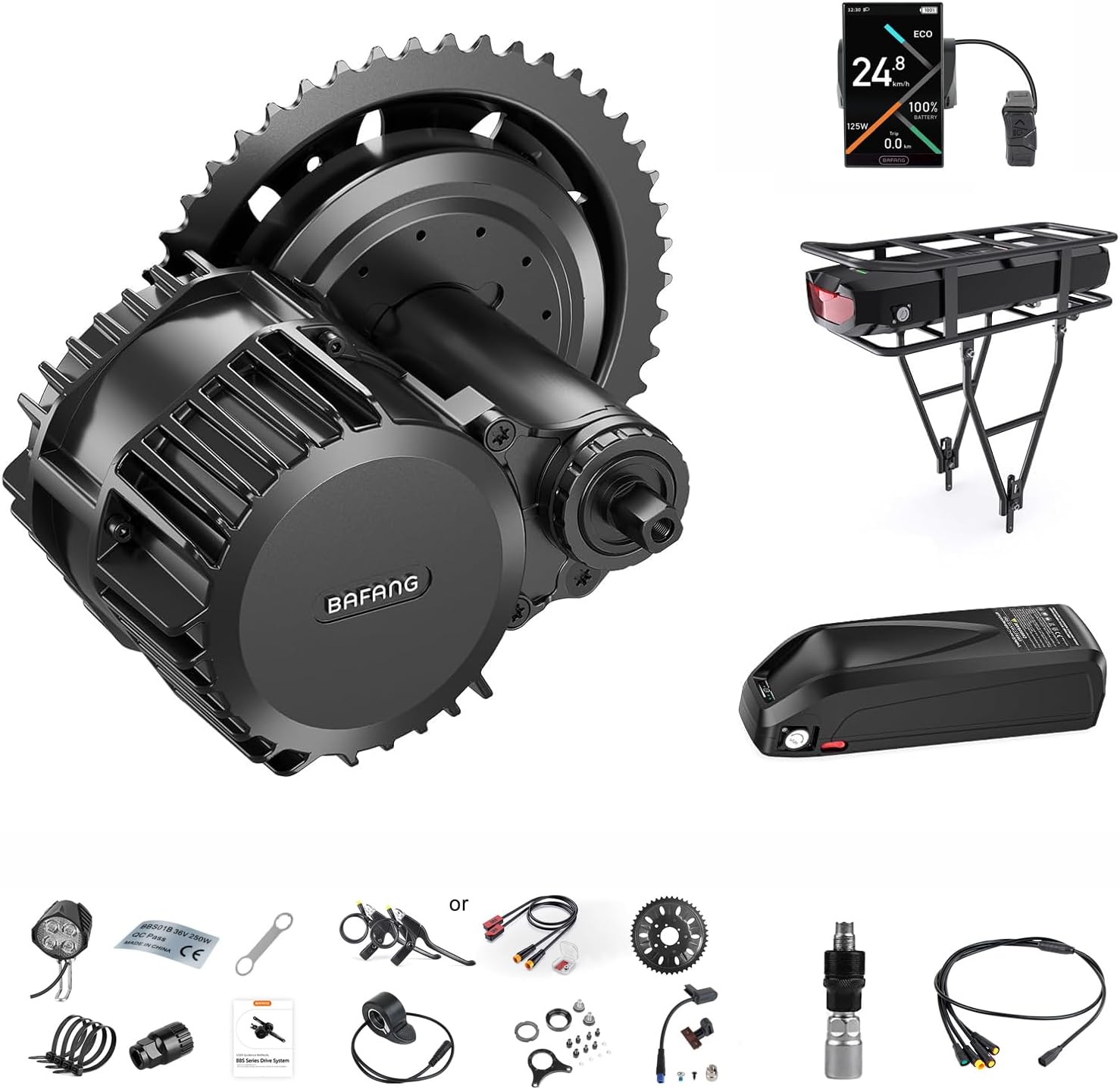
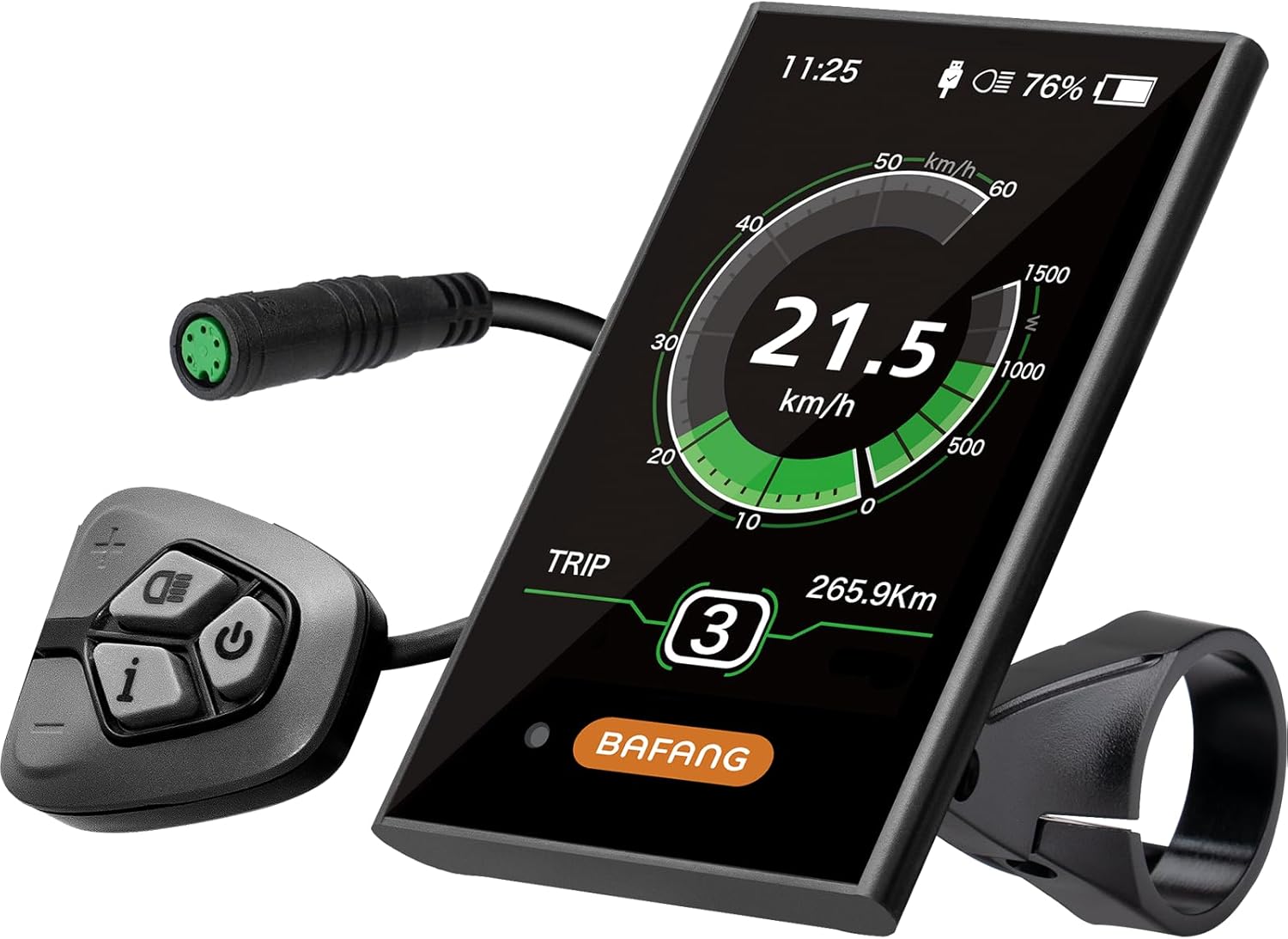
- Complete mid-drive conversion kit
- 1000W
- Fits 68/100/120mm bottom brackets
The BBSHD is the kit every other conversion motor gets measured against. Set it beside the Bafang Ultra, the CYC X1 Pro, the Tongsheng TSDZ2, Bosch's Performance Line CX and a plain hub motor, and how you pedal and how hard you climb decide the winner.
Up to date · September 2026Pick the BBSHD if you want a proven 1000W kit you can tune yourself with a USB cable. Pick the Bafang Ultra if you want the same class of power with a torque sensor, the CYC X1 Pro if 1000W is not enough, the TSDZ2 if light weight and natural assist matter more than power, and a Bosch CX bike if you would rather buy than build.
When builders shop for a BBSHD alternative, they are usually chasing one of three things: smoother pedal feel, more power, or less weight. The BBSHD itself sits in the middle of all three. It is heavy, cadence-sensed and simple, and it will haul a loaded cargo bike up a 12% grade all afternoon if the gearing is right.
Its strengths come from that simplicity. The controller lives in the motor's end cap, the programming is open, and the parts are everywhere.
The weak points are just as well known. Cadence assist feels on-off compared with a torque sensor, the nylon primary gear is a wear part under abuse, and the motor hangs a fair amount of weight low on the frame.
Bafang's lighter sibling gets a full head-to-head in the BBS02 comparison.
| Motor | Pedal sensing | Rated power | Claimed torque | Sold as | Tuning |
|---|---|---|---|---|---|
| Bafang BBSHD | Cadence, plus throttle | 1000W, 30A controller | 160 Nm (kit makers' figure) | DIY kit | Open USB programming (UART); CAN versions via display or cable |
| Bafang Ultra (M620) | Torque, cadence and speed | 1000W in most kit versions | 160 Nm (Bafang figure) | DIY kit and complete bikes | CAN bus, Bafang tools |
| CYC X1 Pro | Cadence; torque sensing on newer generations | Well above 1000W peak at 52–72V, by generation | Varies by generation | DIY kit | External controller with its own settings |
| Tongsheng TSDZ2 | Torque | 250–500W on most versions | About 80 Nm (maker figure) | DIY kit | Stock settings, or community open-source firmware |
| Bosch Performance Line CX | Torque | Pedal assist within e-bike class limits | 85 Nm (Gen 4), 100 Nm on the newest | Complete bikes only | Dealer and app settings |
| Rear hub motor | Cadence or torque, by model | Commonly 500–1500W | Depends on winding and wheel size | Kits and complete bikes | Depends on controller |
Figures are the makers' published claims and common configurations, not test results. Torque claims are measured differently from brand to brand, so compare feel and gearing rather than the headline number.
The Bafang Ultra, sold as the M620, is the motor most BBSHD owners look at next. It sits in the same 1000W class with the same headline torque claim, but it reads your pedaling through a built-in torque sensor. That one change alters how the bike feels more than any number on the spec sheet.
On the Ultra, assist rises as you push harder and fades as you ease off, which suits technical climbing and group rides. The BBSHD delivers its chosen level as soon as the cranks turn, which suits hauling and throttle-heavy riding.
The Ultra's torque sensor also means it cannot be converted to cadence-only riding in the same easy way, and its CAN electronics are less open to tinkering.
For a heavy cargo build or a throttle-first fat bike, the BBSHD makes more sense. For a trail bike where you want the motor to follow your legs, the Ultra is the natural step up.
The CYC X1 Pro exists for riders who have outgrown the BBSHD's 30A controller. It runs at up to 72V with an external controller and is rated for well above 1000 watts at peak, with the exact ceiling depending on the generation and controller fitted.
That power is the point, and it changes the rest of the build. A CYC-class motor puts far more load through the chain, cassette and frame than a BBSHD does.
Newer X1 Pro generations add torque sensing, and CYC's controller gives a lot of room to tune.
The BBSHD counters with simplicity and cost of ownership. Its integrated controller means fewer boxes and cables, and a 52V pack already gives it strong hill performance for most riders.
If you like the BBSHD but want more punch, the programming guide shows how far the stock controller can be tuned.
The standard 1000W BBSHD kit comes in 68, 100 and 120mm versions and programs over a USB cable. For riders who want throttle, hill power and tunable settings from one kit, it remains the reference build.
Shop nowAt the other end sit two motors built for pedal feel rather than brute force. The Tongsheng TSDZ2 is a light, torque-sensed DIY kit; Bosch's Performance Line CX is a factory motor sold only on complete bikes. Both trade peak power for a ride that feels like your own legs made stronger.
The TSDZ2 comes in lower-power versions, most commonly 250W to 500W, with a maker claim of about 80 Nm. It is noticeably lighter and quieter, and its torque sensor makes it popular for commuters and touring bikes.
The Performance Line CX is rated at 85 Nm in its fourth generation and 100 Nm in the newest, and is built to stay within e-bike class limits. It is refined, quiet and backed by dealer service, but it only comes on complete bikes and is not a conversion option.
If you land on the BBSHD, the donor-bike guide helps pick the frame.
BAFANG BBS-HD 1000W Kit |
BAFANG BBS-HD CAN-bus Kit |
BAFANG BBS-HD Kit with Battery | |
| Type | Conversion kit | Conversion kit | Conversion kit |
| Power | 1000W | 1000W | 1000W |
| Voltage | — | 36V/48V/52V | 48V/52V |
| Bottom bracket | 68/100/120mm | 68–73/100/120mm | — |
| Protocol | — | CAN bus | — |
| Battery | — | Option | Option |
| Shop now | Shop now | Shop now |
The last alternative is the one most complete e-bikes use: a hub motor in the rear wheel. It is simpler, quieter on the drivetrain and often less costly, but it drives the wheel directly instead of working through your gears.
That is the core difference on a climb. A BBSHD can drop into a low gear and keep its motor spinning fast, while a hub motor has one fixed ratio and slows down with the bike. On long steep grades a hub motor works hard at low speed, which is where heat builds.
Never leave flat roads? A hub-motor bike can be the right call. For hills, trails, cargo and fat bikes, the BBSHD's gearing advantage is hard to give up.
Ready to convert? Start with the install guide.
It is different rather than better. The Ultra adds a torque sensor for more natural pedal feel in the same power class, while the BBSHD is simpler, throttle-friendly and easier to program.
Both claim 160 Nm and climb hard in the right gear. The BBSHD suits heavy loads and throttle climbing; the M620 suits riders who want assist to follow their pedaling.
Only if you need well above 1000 watts. It needs a high-current battery, a strong frame and a sturdier drivetrain, and it takes the bike out of most legal e-bike classes.
The TSDZ2 is lighter, quieter and torque-sensed, which suits commuting. The BBSHD has far more power for hills, cargo and throttle use.
Bosch CX comes only on complete bikes with dealer support and refined torque sensing. The BBSHD is a kit with more power and throttle for a frame you already own.
The Bafang Ultra for torque-sensed power, the CYC X1 Pro for more power, and the TSDZ2 for light weight. A hub motor suits flat commuting.
Not ready to strip a bike down? These ready-built e-bikes arrive with their own motors and batteries. None of them uses a BBSHD, and none needs a single tool beyond the pedals.