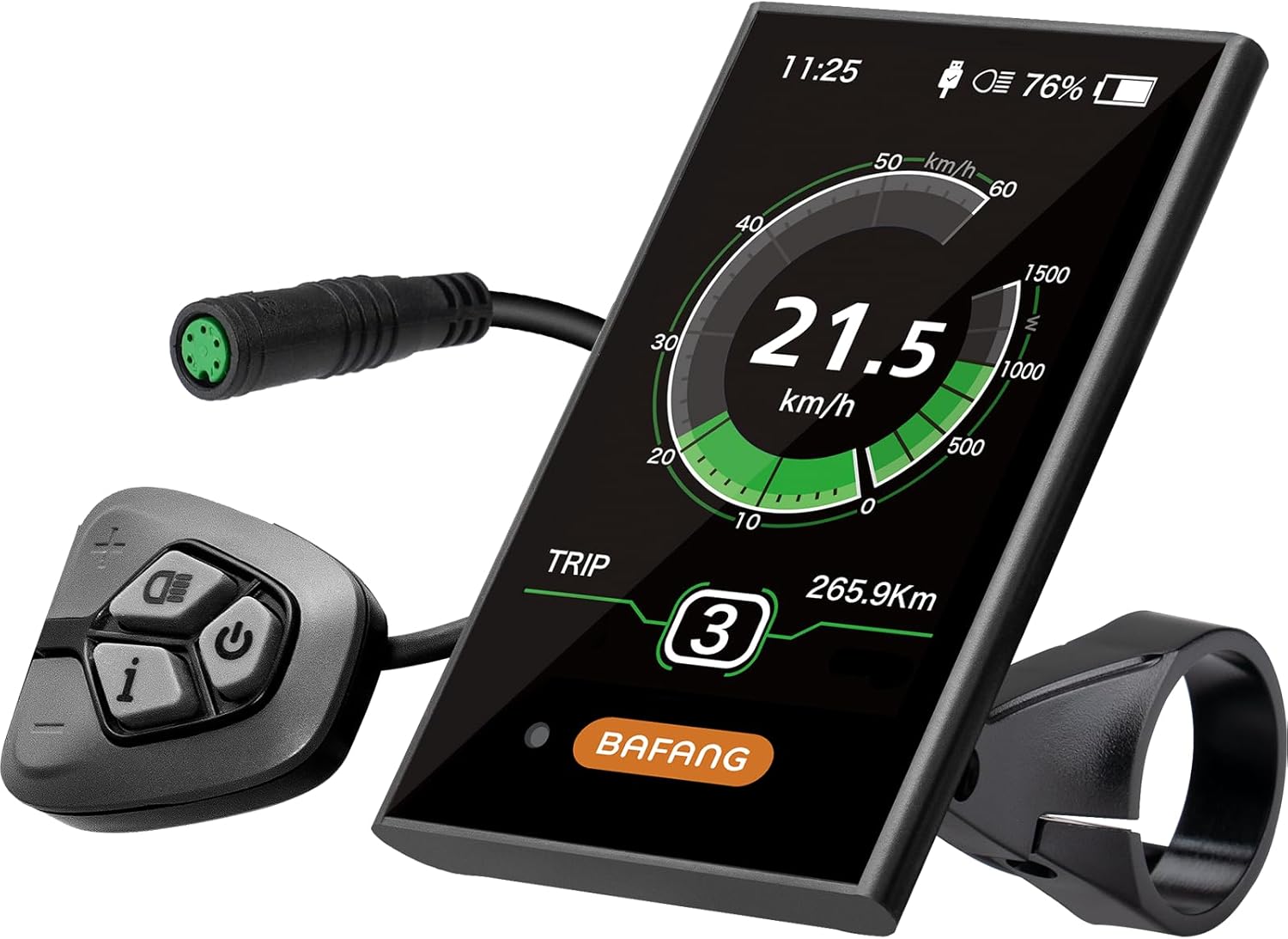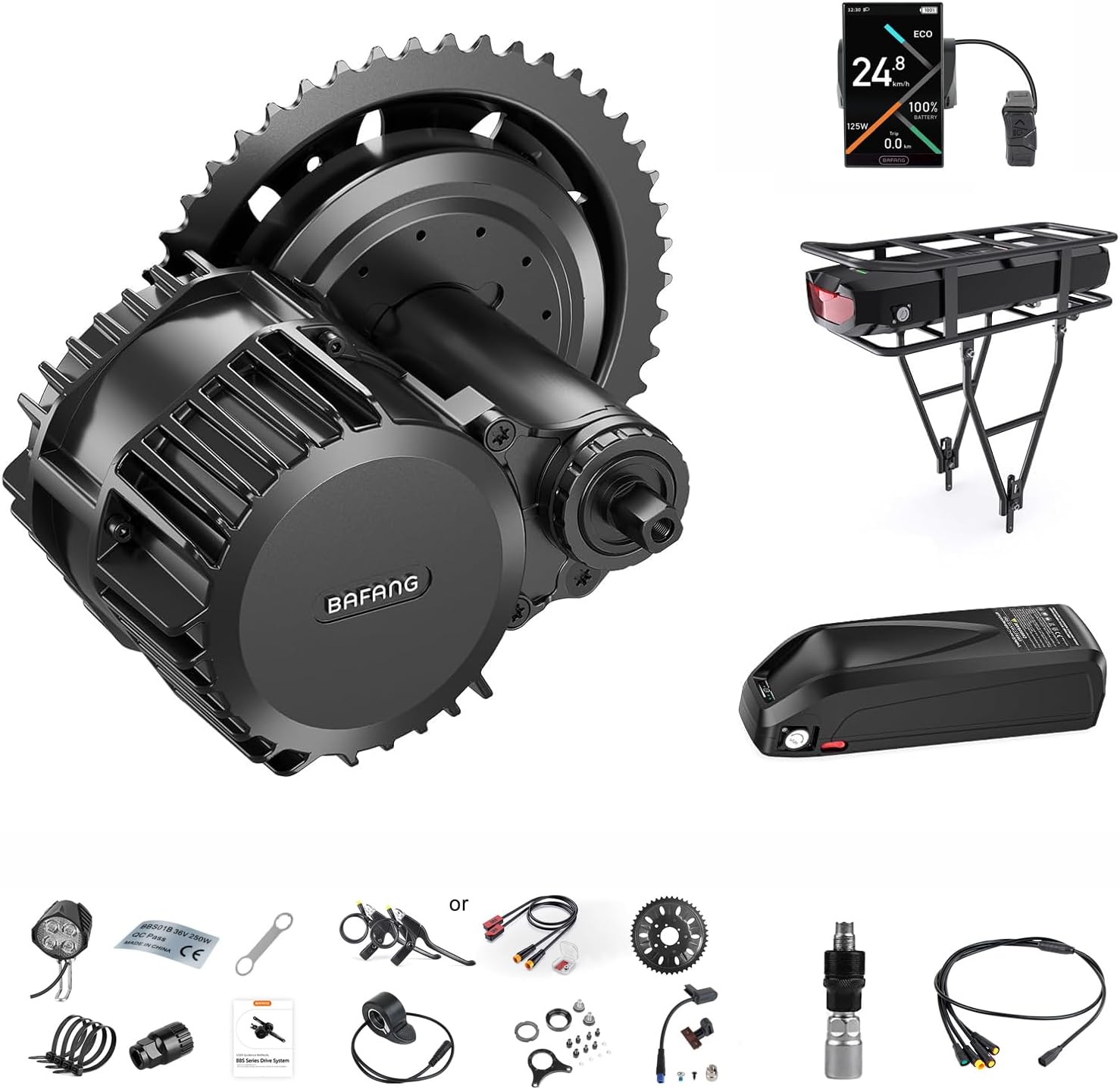
- Complete mid-drive conversion kit
- 1000W · 48V/52V
- Battery option available
The Bafang BBSHD 1000W motor runs on 48V or 52V, and the pack you pick decides its punch, its range and how it feels at the end of a long day. Here is how to choose one that lasts.
Up to date · September 2026Buy a 52V pack if you want the most from a stock BBSHD, or a 48V pack if you already own one or want more choice. Either way it needs a BMS rated for at least 30A continuous, ideally more. Skip 60V and 72V unless you also fit a controller built for them.
The BBSHD 48V vs 52V debate hinges on one extra cell in each series string. A 48V pack has 13 cells in series and charges to 54.6V; a 52V pack has 14 and charges to 58.8V.
That is about 8% more voltage at every point in the ride. At the same 30A limit, the motor gets about 8% more power and spins about 8% faster.
Picture a 20-minute climb near the end of a ride. The 48V pack has sagged toward the low 40s under load, while the 52V pack of the same capacity still holds a few volts more. The motor feels that as a stronger pull at the same assist level.
If you already own a healthy 48V pack, ride it. The gain from 52V is real but modest, and a good 48V pack beats a poor 52V one every time. Cutoff settings are in the programming guide.
| Pack | Cells in series | Full charge | Empty at 3.0V per cell | Stock BBSHD controller |
|---|---|---|---|---|
| 36V | 10 | 42.0V | 30V | Runs, but wastes the motor |
| 48V | 13 | 54.6V | 39V | Yes |
| 52V | 14 | 58.8V | 42V | Yes |
| 60V | 16 | 67.2V | 48V | No |
| 72V | 20 | 84.0V | 60V | No |
Voltages follow from lithium-ion cells at 4.2V full and a 3.0V cutoff. Many riders set the cutoff a volt or two higher to spare the cells.
Voltage gets the attention, but the discharge rating decides whether a battery survives a BBSHD. The stock controller can pull 30A, and a pack that cannot supply that cuts out on climbs, sags hard and ages fast.
Two numbers set the limit: the BMS rating and the cells behind it. The BMS must allow at least 30A continuous, and the cells in each parallel group must share that load comfortably.
The 48V 20Ah Bafang pack carries a 30A BMS, a match for the stock controller's limit rather than a margin above it. If a pack trips under load, lowering the controller current by a few amps is a quick fix.
Signs a battery is too weak for the HD:
A weak pack can mimic a failing controller, which is why the controller guide starts its diagnosis at the battery.
BAFANG BBS-HD Kit with Battery |
BAFANG E-bike Battery |
BAFANG BBS-HD CAN-bus Kit |
BAFANG BBS-HD 1000W Kit | |
| Type | Conversion kit | Battery | Conversion kit | Conversion kit |
| Power | 1000W | — | 1000W | 1000W |
| Voltage | 48V/52V | 48V | 36V/48V/52V | — |
| Bottom bracket | — | — | 68–73/100/120mm | 68/100/120mm |
| Protocol | — | — | CAN bus | — |
| Battery | Option | — | Option | — |
| Shop now | Shop now | Shop now | Shop now |
The BBSHD 72V and BBSHD 60V questions come from riders chasing more speed. On a stock controller the answer is no: the board is built for packs up to 52V, and a 60V pack's 67.2V full charge is beyond what its parts are meant to take.
A 72V pack charges to 84V. Connecting either one to the stock controller risks destroying it on the first power-up or the first hard pull.
Higher voltage is possible with an aftermarket controller rated for it. The motor then spins faster and makes more power, and every weak point in the system feels it.
For most riders, a 52V pack and a well-tuned controller deliver the strongest reliable BBSHD. If you want far more than that, a different motor may suit better; the motor comparison weighs the HD against its rivals.
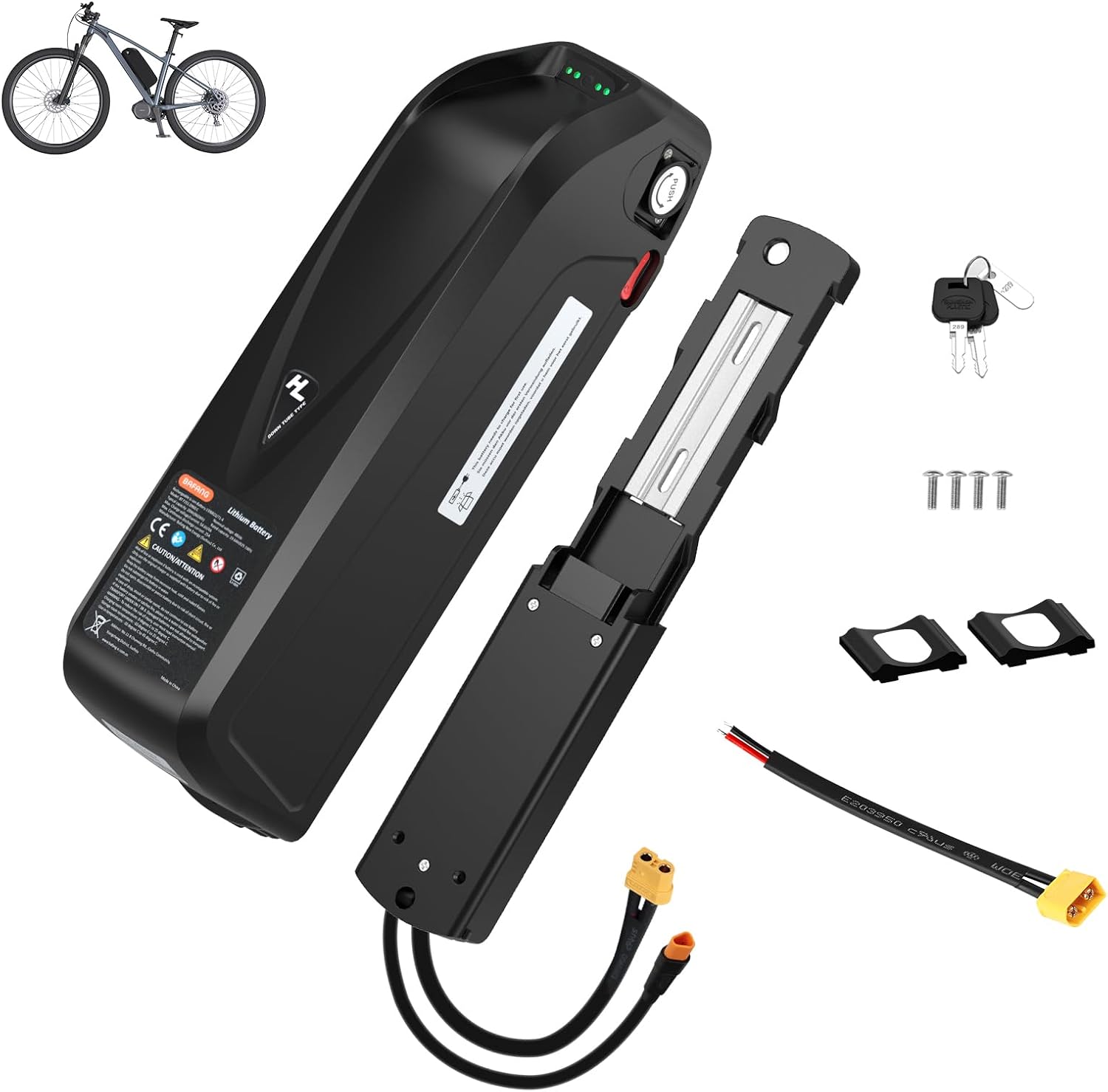
A 48V 20Ah pack with a 30A BMS, an XT60 output lead, a mounting plate and a charger in the box. On a CAN-bus HD it reports exact charge and voltage to the display instead of a vague bar.
Shop nowCapacity decides range. Multiply voltage by amp-hours to get watt-hours, the fairest way to compare packs: a 48V 20Ah pack holds about 960Wh, and a 52V 20Ah pack about 1,040Wh.
How far that goes depends on assist level, speed, terrain, rider weight and tyres. A mid-drive used gently on flat roads might use somewhere around 15Wh per mile; hard trail riding or cargo on hills can use two or three times as much.
| Pack | Energy | Gentle riding | Hard riding |
|---|---|---|---|
| 48V 13Ah | about 620Wh | roughly 35–40 miles | roughly 15–20 miles |
| 48V 20Ah | about 960Wh | roughly 55–65 miles | roughly 25–30 miles |
| 52V 20Ah | about 1,040Wh | roughly 60–70 miles | roughly 25–35 miles |
Treat those as rough bands, not promises. Then choose where the pack will ride:
Current HD kits use an XT60 plug on the motor lead, so match the pack or fit a proper adapter. Clearance under the down tube matters too, since the motor sits there; measure it with the install steps open beside you.
A Bafang BBSHD kit with battery is the simplest start for a first build. The pack and plug arrive matched to the motor, a charger normally comes with the pack, and there is no guessing about discharge ratings or connectors.
HD kits offer 48V packs from 13Ah to 20Ah and 52V packs at 20Ah. The big 52V option suits long rides and heavy loads; a 13Ah pack keeps a lighter trail bike nimble.
A generic pack works with a CAN kit too, through the XT60 lead, but without the data link the display falls back to an estimate.
Look after the pack and it lasts years:
The best battery for a BBSHD is one with enough discharge headroom, a sensible capacity for your rides and a shape that fits your frame. Voltage comes third. How each pack moves the motor's rpm and power figures is worked through in the BBSHD 1000W spec guide.
It gives about 8% more voltage, so a bit more power and speed at the same current, and it holds up better as the pack drains. A healthy 48V pack still works well.
Not with the stock controller, which is built for packs up to 52V. A 72V pack needs an aftermarket controller rated for it, and it adds heat and wear.
At least 30A continuous from the BMS, since that is the stock controller's limit. A pack rated at 35–40A or more runs cooler and trips less.
A 52V or 48V pack with a BMS rated above 30A, a capacity that suits your longest ride, and a shape that fits your frame. Down-tube packs keep weight low.
Not on the stock controller. A 60V pack charges to 67.2V, beyond what the stock board is built for.
Battery packs for these kits normally come with a charger, and the Bafang 48V 20Ah pack ships with a 100–240V smart charger. Check the box contents for the voltage and capacity option you choose.