
mGYDY BBSHD Chainring
32T–38T BBSHD ring in T6-treated alloy with a 12 mm offset and 7–12 speed chain support.
- Chainring for the BBSHD
- 32/34/36/38T options

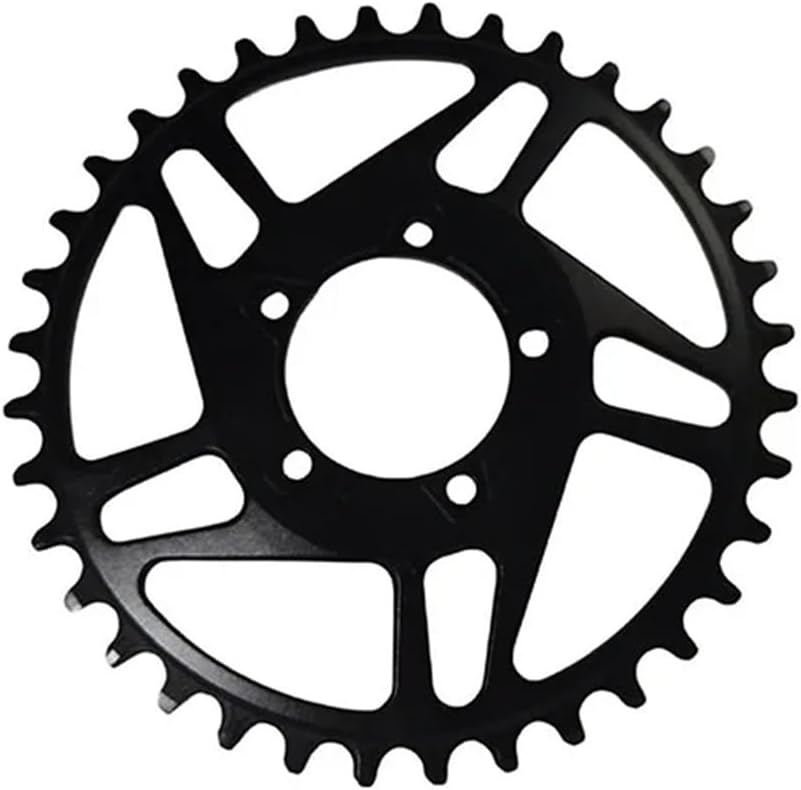
A direct-mount aluminium ring for the Bafang BBSHD (M625) in 32T, 34T, 36T and 38T, with an offset of about 8 mm. It is aimed at fat bikes, where low gears and a wide chainline both matter.
Fat bikes break the usual chainline rules. With a 100 mm or 120 mm bottom bracket and a rear end of 170 mm or wider, the cassette sits far outboard, and a ring that pulls the chain inward for a normal bike leaves it running at an angle across the whole cassette.
The ebsenopower ring answers that with a modest offset of about 8 mm. Offset, sometimes called dish, is how far the tooth plane sits from the ring's mounting face. Deep-offset rings, 12 mm to 20 mm and more, are generally built to pull the chain inboard on standard frames. A shallower 8 mm dish keeps the teeth further out, closer to where a fat bike's cassette wants the chain.
Offset figures are measured from each maker's own reference, so an 8 mm ring from one brand and an 8 mm ring from another may not land in exactly the same place. The number tells you the family; your tape measure tells you the fit.
| Rear spacing | Typical target chainline |
|---|---|
| 135 / 142 mm | About 50 mm |
| 170–177 mm (fat) | Around 66–70 mm |
| 190–197 mm (fat) | Around 72–80 mm |
Those are working ranges, and hub design shifts them a little. What matters is that the ring's teeth line up with the middle of your cassette once everything is bolted on.
The ring comes in four sizes, all even tooth counts, and weighs 200 g in the configuration shown. That is light for a part that carries the full output of a 1000W motor, which is the trade aluminium always makes: low weight in exchange for faster wear than steel.
| Spec | Value |
|---|---|
| Type | Direct-mount chainring |
| Motor fit | Bafang BBSHD (M625) |
| Model name | M625 Chainring |
| Tooth options | 32T, 34T, 36T, 38T |
| Configuration shown | 36T |
| Offset | About 8 mm |
| Frame fit | Fat bike compatible |
| Material | Aluminium alloy |
| Item weight | 200 g |
| Intended riding | Off-road and trail |
| In the box | E-bike chainring |
| Front drivetrain | Single ring, no front derailleur |
| Package size | 5.91 × 3.94 × 3.15 in |
Soft ground is the hardest load a BBSHD sees. A four-inch tyre in loose sand or fresh snow asks for full torque at walking pace, and on the stock ring that means the motor turns slowly while drawing heavy current.
Slow and loaded is where heat comes from. The motor windings and controller warm fastest when the crank turns slowly under high current, and on a long soft-ground push that heat soak can trigger the controller's thermal cut-back. A smaller ring keeps crank speed up for the same wheel speed, so current drops and the motor stays in a happier range.
Here is how the four sizes compare on a 2.3 m fat bike wheel at 90 rpm.
| Ring | Top gear (11T) | Low gear (42T) |
|---|---|---|
| 32T | 22.5 mph | 5.9 mph |
| 34T | 23.9 mph | 6.2 mph |
| 36T | 25.3 mph | 6.6 mph |
| 38T | 26.7 mph | 7.0 mph |
The internal nylon primary gear benefits too. It takes its worst loads at low speed and high torque, so a lower gear spreads that load more gently; wear signs are listed in the nylon gear guide.
Buying a ring by offset number alone is a gamble. Two minutes with a ruler tells you whether 8 mm is right or whether a deeper ring suits your frame better.
Chainline is the distance from the frame's centreline to the middle of the ring's teeth. Measure it with the stock ring fitted, then compare it with the centre of your cassette. If the stock ring already sits close to the cassette centre, keep the offset change small. If the chain angles sharply inward in the small cogs, you need the ring further out.
On a fat bike, the 8 mm ring tends to suit frames where deeper-offset rings pull the chain too far in. On a standard 68–73 mm bottom bracket, it may do the opposite and leave the chain outboard. That is where rings like mGYDY's 12 mm offset or CHAOZHU's 20.5 mm offset ring earn their place.
Tyre clearance is the other fat bike check. A chain running too far inboard can touch a 4.5-inch tyre in the largest cogs. For 100 mm and 120 mm bottom brackets, spacers and the full chainline math, work from the BBSHD fat bike guide.
Write your measurements down before ordering. They also tell you which size of spacer, if any, you might need later.

Installing the ring is a standard BBSHD ring swap with a couple of fat bike extras. The motor stays in the frame; the crank arm, ring and chain do the moving.
Tools first: a crank puller that matches your crank arms, hex and Torx keys, a torque wrench, medium-strength threadlocker, a chain tool and a fresh quick link. If the crank or the motor's lockring has to come off, the install guide handles both jobs.
Going from the stock 46T to a 34T ring removes roughly three inner-plus-outer link pairs, using the rule of one link pair per four teeth. A chain left too long on a small ring slaps and drops over rough ground.
There is no chain guard, so a clutch derailleur and a correctly sized chain carry the retention job. A gear sensor that cuts motor power during shifts also saves chains and teeth on steep climbs.
It is designed with fat bikes in mind. On a standard 68–73 mm bottom bracket, measure chainline first; a deeper-offset ring may line up better.
It is how far the tooth plane sits from the mounting face. A shallower offset keeps the chain further outboard, which suits wide fat bike rear ends.
32T or 34T. Low gearing keeps the motor spinning and cooler when the tyres sink in.
No. It is cut for the BBSHD (M625); BBS01/BBS02 motors use a different output.