- Chainring for the BBSHD
- 1000W · 48V
- 42T options
A heavy-duty steel ring in 32, 34, 36 and 38 teeth for the BBSHD and its sibling codes BBS03, M615, M625 and G320, with an anti-drop tooth profile for rough ground. The same name also covers aluminium offset rings from 36T up to 52T.
A BBSHD puts far more torque through its chainring than legs ever do, and it does it constantly. Aluminium rings look good and weigh little, but under that load, with a gritty chain, their teeth wear into hooks. This ring takes the other road: steel teeth in 32, 34, 36 and 38 tooth sizes, built for high torque and heavy loads.
Steel is harder than aluminium, so each tooth holds its shape longer under the same abuse. Pile on miles in bad weather and that alone justifies it. A cargo bike carrying kids up a long hill every morning, or a fat bike ridden through slush and road salt all winter, wears a drivetrain far faster than a summer trail bike.
The maker lists fit for the BBSHD, BBS03, G320, M615 and M625, all 1000W systems. BBS03 is another name for the BBSHD, and M615 and M625 are Bafang's newer model codes for the same family, with M625 commonly tied to wide-shell fat-bike versions. It does not fit the smaller BBS01 or BBS02.
| Spec | Value |
|---|---|
| Brand | Generic |
| Motor fit | Bafang BBSHD, BBS03, G320, M615, M625 1000W |
| Material (lead ring) | Steel |
| Tooth counts (steel) | 32T, 34T, 36T, 38T |
| Tooth profile | Anti-drop, for secure chain retention |
| Mounting pattern | 4-bolt |
| Intended use | Fat e-bikes, heavy loads, high torque |
| Aluminium option | 40T or 42T, for BBS-HD, M625, M615, G320 48V 1000W |
| Aluminium 6061-T6 option | 36T, 13mm offset, black |
| Large-ring option | 40T to 52T, offset |
| Chainline option | 42T aluminium offset-correction ring |
| Model | FDWHGHYCG-36T |
| Package size | 7.21 × 7.17 × 0.87 in |
| Included | 1 chainring |
The Generic name here covers more than one part. The lead ring is steel in 32 to 38 teeth, but aluminium rings share the name, and they differ in tooth count, offset and purpose. Ordering the right one means deciding what problem you are solving first: wear, gearing or chainline.
| Version | Material | Teeth | What it solves |
|---|---|---|---|
| Heavy-duty sprocket | Steel | 32T–38T | Wear under cargo and fat-bike loads |
| Offset ring | Not stated | 40T–52T | Higher top speed on road-focused builds |
| Lightweight ring | Aluminium | 40T or 42T | Lighter mixed trail and commuting gearing |
| 6061-T6 ring | Aluminium | 36T, 13mm offset | Climbing gearing with chainline correction |
| Offset-correction ring | Aluminium | 42T | Chain line on a standard frame |
A few rules of thumb help pick between them:
Because the versions share one name, read the tooth count and material on the part you receive before fitting it. A steel ring and an aluminium ring of similar size look alike in black, and the offset is easy to miss until the chain starts rubbing. Hold the new ring against the old one on the bench: the difference in tooth position tells you how far the chain will move.
The 42T offset-correction ring is the chainline fix for riders happy with the stock gearing but tired of chain rub in the big cogs. Offset and chainline on different frame widths are worked through in the BBSHD chainring guide.
Changing a BBSHD chainring is a home-garage job, but it needs the right tools. The ring sits behind the drive-side crank arm, so the crank comes off first. The steel ring uses a 4-bolt pattern and the maker describes it as an easy replacement for the stock ring.
Changing tooth count changes chain length. Dropping from a 46T stock ring to 36T frees up chain; going to 52T needs more. Re-size the chain so the rear derailleur has correct wrap in the biggest and smallest cogs.
If the motor is coming off anyway, use the BBSHD install guide for the lockring, the bottom bracket fit and the torque on the main mounting nut. A speed sensor re-check is worth doing too, since the magnet sometimes gets knocked during rear-wheel work.
The steel ring answers a different question from the aluminium offset rings. Steel is about longevity under load. Deep-offset aluminium rings are about chainline on a regular frame. Riders often need one more than the other, and it is worth deciding which problem is louder on your bike before ordering.
Pick the steel ring for a hard-worked bike: heavy cargo, towing, winter riding, fat tires on soft ground. It accepts a dirty chain better and lasts longer between replacements. Pick an aluminium offset ring if your chain rubs or drops in the big cogs on a 68–73mm frame, since fixing chainline also reduces wear.
Read the motor code on the housing first: it should say BBSHD, BBS03, M615 or M625, not a BBS01 or BBS02. Choose tooth count from the gearing you want, and allow for re-sizing the chain. If you pick one of the aluminium versions, check the offset against your frame and the chain speed against your drivetrain.
Chain care decides ring life more than material does. A clean, lubed chain replaced before it stretches will make a steel ring last a long time, and even an aluminium one last well. The torque figures behind all of this come from the BBSHD 1000W guide.
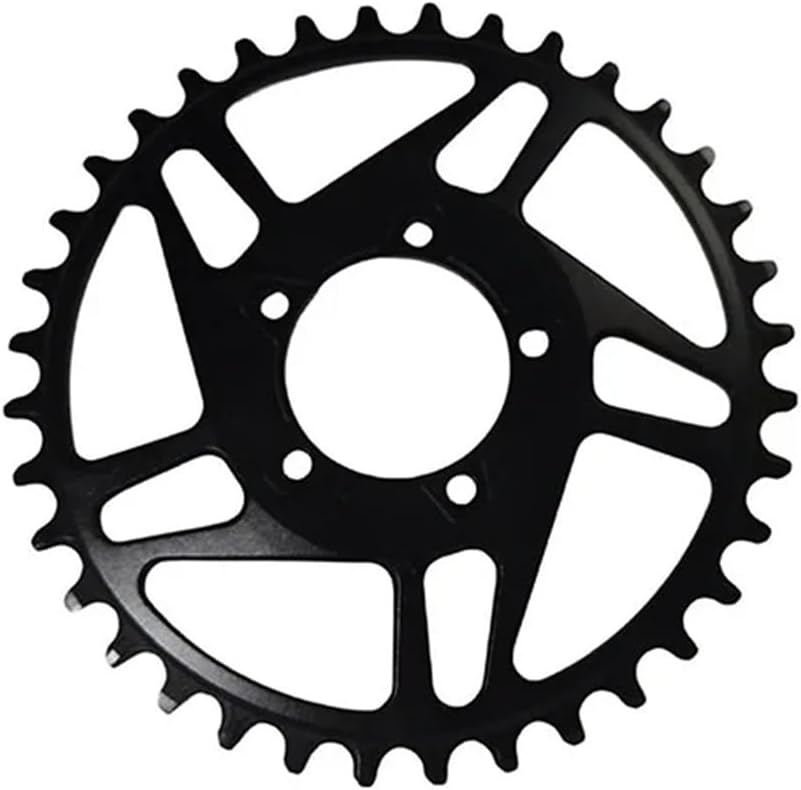
Steel teeth wear more slowly under constant motor torque and dirty chains. Cargo, towing, fat bikes and winter riding all suit it; the price is extra weight.
Yes, the maker lists the BBSHD, BBS03, G320, M615 and M625 1000W systems. It does not fit the BBS01 or BBS02.
Usually. Going from a 46T stock ring down to 32–38T frees up chain; remove links so the derailleur keeps proper tension.
The 42T aluminium offset-correction ring or the 36T 13mm offset ring. The steel ring is aimed at wear and heavy loads, not chainline.